
Delhi Police arrested a man, Surender, for allegedly spreading misinformation on social media regarding the mass death of fish in the Yamuna river near Sonia Vihar. The arrest follows an FIR filed by the Delhi government's irrigation and flood control department. The incident has sparked a political debate between Delhi Water Minister Parvesh Verma and the AAP, with both sides trading accusations over pollution and river cleaning efforts. The exact cause of the fish deaths remains unconfirmed, raising concerns ahead of Chhath Puja.

The East Delhi district administration conducted a trial using drones to spray water over dust-prone areas near Akshardham on Saturday. This initiative aims to control construction-related dust and combat air pollution, with officials exploring technology to make water sprinkling more efficient and cover larger areas.

A report by Envirocatalysts reveals that Delhi was the most polluted among 24 state and Union Territory capitals between Diwali 2025 and Diwali 2026, with annual average PM2.5 concentrations more than double the national standard. The analysis highlights that Diwali-day pollution contributes minimally to the overall annual exposure, with other sources like vehicles, dust, and industrial emissions being the primary culprits. The report calls for year-round clean-air action plans.

Billions of rupees spent on river cleaning programmes have gone down the drain. This situation cannot be allowed to continue, says Business Standard.

Delhi's air quality slightly deteriorated on Wednesday, moving into the 'poor' category with an AQI of 232, and is forecast to worsen to 'very poor' by Friday due to unfavourable meteorological conditions. PM2.5 remains the dominant pollutant, with vehicular emissions and biomass burning identified as major contributors. The city also experienced its coldest morning of the season.

A thick layer of smog enveloped parts of North India, including Delhi, Haryana, Punjab, and Western Uttar Pradesh, a day after Diwali celebrations. Air Quality Index (AQI) levels soared to 'very poor' and 'severe' categories, with Delhi recording its most polluted Diwali in five years. Residents reported severe health issues, prompting calls for urgent government intervention.

Vedanta Ltd's aluminium plant in Jharsuguda, Odisha, is under regulatory scrutiny by the state's Water Resources department regarding its water sources and drawal history. This follows a complaint alleging unauthorised groundwater extraction and previous financial demands for illegal water use, with the National Green Tribunal also seeking responses on environmental concerns.

Delhi experienced its most polluted Diwali in five years, but the official air quality figures are under scrutiny. Several monitoring stations reportedly went offline during the peak firecracker period on Sunday night, leading to discrepancies between government and private agency data. Experts and opposition leaders have raised concerns about the reliability of the AQI tracking, with allegations of "data fraud" and calls for greater transparency and accountability.

Delhi's air quality plunged into the 'severe' category for the first time this season on Friday morning, with the average Air Quality Index (AQI) hitting 403. Several monitoring stations reported even higher levels, prompting the invocation of Stage III of the Graded Response Action Plan (GRAP) to curb pollution.

The Delhi government plans to open former Chief Minister Arvind Kejriwal's 'Sheesh Mahal' residence for public viewing next week, with a ticketing system in place. This move, announced by Public Works Department Minister Parvesh Verma, is framed as an effort to expose alleged corruption, while the AAP dismisses it as a diversion from the Yamuna River pollution issue. The property, which underwent a controversial renovation, will eventually be handed over to a private hospitality company for official events.

The Supreme Court has expressed serious concerns over the non-implementation of Solid Waste Management rules, stating that despite India's economic growth, its sanitation performance remains poor. The court highlighted the need for unwavering implementation by authorities and adherence by citizens, noting that existing laws and rules are falling short of their objectives. It has tasked district collectors with reinventing strategies and assisting in the implementation of SWM rules, while also pointing out deficiencies in addressing unorganised sectors and leveraging public-private partnerships.

An activist in Mathura, India, protested the pollution of the Yamuna River by dressing as a cockroach and staging a demonstration at the municipal corporation office.

The Supreme Court has permitted the bursting of green firecrackers in Delhi-NCR for Diwali on November 7 and 8, 2026, with specific time restrictions. The court emphasized that the right to engage in practices with religious colour is qualified and cannot override constitutional restrictions on environmental pollution. It also issued detailed guidelines for manufacturers, traders, and authorities to ensure compliance and monitor air quality.

A University of Delhi study has found significant heavy metal contamination in agricultural soil and vegetables grown along the Yamuna river in the capital. The research highlights potential non-carcinogenic and carcinogenic health risks to consumers due to crops irrigated with polluted wastewater, with specific vegetables showing dangerously high levels of metals like nickel, chromium, and molybdenum.
A new review reveals that microplastics are not just pollutants but also act as carriers for toxic chemicals, microorganisms, and antibiotic resistance genes across various environmental compartments. This "Trojan horse effect" allows them to transport persistent organic pollutants and heavy metals, releasing them into organisms upon ingestion. Additionally, microplastics foster microbial communities, known as the plastisphere, which can accelerate the spread of antimicrobial resistance, amplifying ecological hazards.
Researchers at IIT-Guwahati have identified a type of blue-green algae (cyanobacteria) that can effectively remove lead from contaminated water. The study highlights the role of exopolysaccharides (EPS) produced by the algae in absorbing lead, with laboratory experiments showing up to 66.2% removal. This discovery offers a promising, naturally abundant solution for water purification, though further validation is needed before commercial application.
Scientists at the GraphIN 2026 conference in Kochi highlighted graphene's potential in water purification, discussing graphene-based membranes and nanocomposites for removing pollutants and improving desalination.

Before protesting against the State, the citizen should not have to ask: Sir, may I protest, please?, asserts Prem Panicker.

Police have granted permission for Congress leader Rahul Gandhi's 'Chhatron Ki Goonj' event in Pune, but with 30 stringent conditions, including prohibitions on 'objectionable' banners and directives to avoid hurting religious sentiments.

The Anti-Corruption Branch has sought judicial custody for former Delhi minister Satyendar Jain, ex-Delhi Jal Board CEO Udit Prakash Rai, and three others in a corruption case related to alleged irregularities in the tendering process for Delhi Jal Board's sewage treatment plant projects. The accused's counsels have challenged the arrests, with Jain's lawyer planning a bail plea.
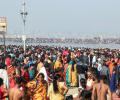
The National Green Tribunal on Wednesday slammed the Uttar Pradesh Pollution Control Board, asking whether it disputed the Central Pollution Control Board's finding on high levels of faecal coliform being found in the water at various locations in Prayagraj during the ongoing Mahakumbh.
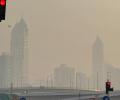
The Maharashtra Pollution Control Board (MPCB) has ordered the shutdown of 19 ready mix concrete plants in the Mumbai Metropolitan Region for violating environmental guidelines and contributing to deteriorating air quality levels.
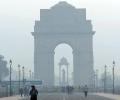
'Most pollution boards across the country have unused funds. There is practically no reason why pollution should not be a political priority.'

Authorities in Bengaluru have sealed the studio premises hosting the Kannada reality show 'Bigg Boss' due to serious violations of environmental regulations cited by the Karnataka State Pollution Control Board (KSPCB).

'It is high time to recognise that this is the greatest issue India is confronting.' 'Even the BJP should be raising concerns because polluted air suffocates everybody's child.'

Thousands of dead fish have been found floating in the Najafgarh drain near the Dhansa regulator, raising concerns about pollution levels. Activists attribute the deaths to the inflow of untreated residential effluents and industrial wastes, exacerbated by rising temperatures.

'Can you believe there are over 26,500 deaths linked to heatwave-driven ozone in 2024?'

The Supreme Court intervened to protect the Punjab Kesari newspaper from coercive actions by the Punjab government and its pollution control board, ensuring its continued publication.

Mundane as it may seem, this is in some ways a metaphor for the challenges facing the nation, argue Arvind Subramanian and Devesh Kapur in their new book, A Sixth Of Humanity.

Police in Navi Mumbai have registered a case against two individuals for allegedly disposing of hazardous chemicals in an open area, raising concerns about environmental and health risks.

The GST Council at its next meeting may consider a reduction in taxes on air and water purifiers as air quality across the country worsens and access to safe drinking water remains uneven.

Fourteen individuals have been arrested in Varanasi for allegedly defiling a place of worship and hurting religious sentiments after a video surfaced showing them consuming chicken biryani during an Iftar party on a boat in the Ganga river.

A Varanasi court has remanded 14 people to judicial custody after they allegedly held an Iftar party and consumed chicken biryani on a boat in the Ganga river, sparking outrage and accusations of hurting religious sentiments.

Uttar Pradesh Chief Minister Yogi Adityanath asserted that Uttar Pradesh enjoys a clean environment, unlike Delhi, which he likened to a 'gas chamber' due to its pollution levels.
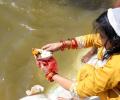
Uttar Pradesh Chief Minister Yogi Adityanath on Wednesday dismissed concerns regarding faecal contamination in the waters at Triveni Sangam, stating that continuous monitoring and purification processes ensure its quality.

The Delhi Pollution Control Committee (DPCC) reports improved air quality in Delhi compared to the same period last year, attributing it to coordinated efforts by government departments. Officials aim to avoid implementing GRAP Stage III restrictions through proactive measures and public participation.

The Uttar Pradesh government, citing a scientist, has asserted that Ganga water at the ongoing Maha Kumbh in Prayagraj is as pure as "alkaline water", debunking concerns raised by the Central Pollution Control Board (CPCB) about water quality. The government claims that a scientist found no bacterial growth or decline in the water's pH level, despite millions of devotees bathing in the river. However, experts caution that the quality of the Ganga water is not static and can vary greatly depending on various factors.

The Brihanmumbai Municipal Corporation (BMC) has issued stop-work notices to 53 construction sites for contributing to air pollution in Mumbai. The civic body has also directed strict adherence to air pollution guidelines, including the use of AQI monitoring sensors. The Bombay High Court has also addressed the issue of air pollution in the city.

The Commission for Air Quality Management (CAQM) has revoked restrictions imposed under GRAP 3 in Delhi-NCR following improvements in air quality. Non-essential construction and demolition activities are now allowed to restart, and restrictions on vehicles have been lifted.
Delhi government mandates 50% work from home for offices and private establishments under GRAP stage three due to severe air pollution. Essential services are exempted.
